A First Introduction, Without the Interview Feel
Plan a first introduction with a clear setting and a simple way to make decisions, so both people can feel at ease and choose what happens next.

You reach a quiet café for a first introduction and find the other person has already chosen a table. A clear plan can make the opening easier, but a stack of prepared questions may leave you both feeling assessed. The aim is to make the meeting manageable and leave room to decide, without pressure, whether you would like another one.
Agree on a setting and an easy exit
Choose somewhere public, accessible and calm enough to hear one another. A café near a station, a hotel lounge or a busy park path may suit, depending on what feels comfortable to both of you. A short coffee or walk offers a natural stopping point; neither person has to commit to an elaborate outing.
Make the invitation specific and give the other person a choice: “Would you prefer the café beside the station or a short walk in the park?” If either option does not work, ask what would suit them. Mention practical details such as access needs, dietary requirements or transport before meeting, rather than hoping they will be easy to manage on the day.
Use a few prompts without turning them into a script
Keep a couple of light subjects in mind in case you need a starting point. You might ask about a local place they enjoy, a recent book or film, or how they like to spend a free afternoon. Treat these as possible openings, not a sequence to complete.
Early questions about income, family plans, relationship history or personal difficulties can feel like screening when asked quickly. If one of these subjects matters to you, allow the conversation to develop and check that the other person is comfortable before raising it. You can also decide that a first meeting is not the right time.
Notice whether the meeting feels mutual
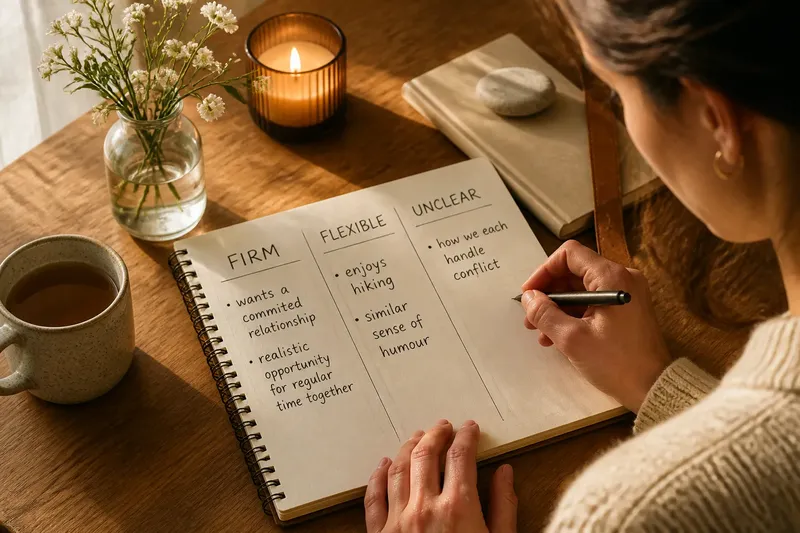
Instead of judging the meeting by how much you learn, notice whether both people can shape it. Can you each speak, change direction, decline a subject or take a moment to think? Differences in confidence or speaking style are normal; repeated interruptions or pressure to disclose more are different signals.
Think of the plan as a coat hook by the door: useful support, not the reason you came. A simple setting and a natural stopping point can hold the practical details while you decide whether you feel at ease with one another.
Say you have agreed to meet at a café near the station, and your date arrives to find the entrance has steps that are difficult for them to manage. You could ask whether they would prefer to choose a nearby accessible place or reschedule, then follow their choice. If you move to the alternative café and both settle comfortably, the meeting can proceed; if neither option suits, you can part kindly without treating the inconvenience as a verdict on either person.
How can you handle common first-meeting decisions?
What if the conversation goes quiet?
You do not need to fill every pause. Take a moment, then offer a simple choice: return to a subject already mentioned or let the quiet continue.
How can you raise intentions without pressure?
If the subject comes up, state what you are looking for in plain terms and invite the other person to share their view. If either of you would rather leave it for another time, respect that boundary.
What if one person wants to extend the meeting?
Ask directly rather than assuming the other person wants to continue. If they decline, thank them for the time and let the original plan stand.
How should you end the meeting if you are unsure?
Thank them and say you would like a little time to think. You do not owe an immediate decision, and the other person can make their own choice as well.
Close clearly and leave room for either answer
If you would like to meet again, say so simply: “I’ve enjoyed talking with you. Would you like to meet again?” If you are unsure, thank them for meeting and take time to decide. A first introduction is not a promise, and interest does not have to be mutual.
A brief, courteous message afterwards can make your decision clear without turning it into a judgement of someone’s character. For a first introduction, the useful question is not whether every subject came up; it is whether both people had room to make choices and leave the meeting with their dignity intact.